
Impact: Spring 2026
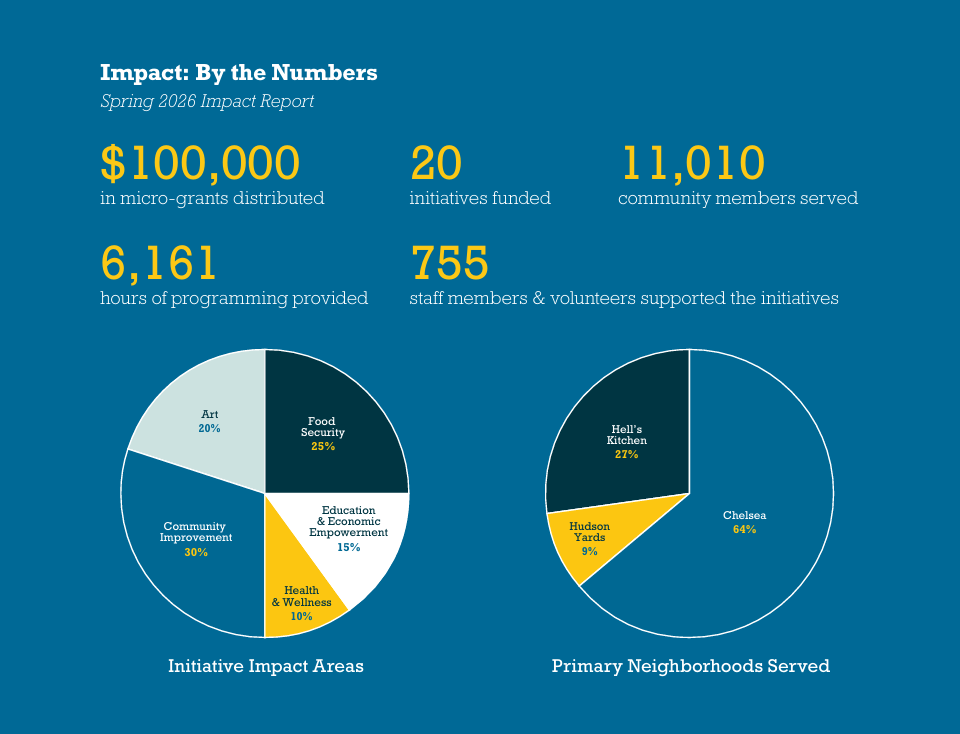
Since its founding in 2018, WSCF has given over $1.65M in grants to organizations in Chelsea, Hell’s Kitchen, and Hudson Yards*.
The Spring 2026 Impact Report outlines the impact of WSCF’s Fall 2025 grants and highlights a few of the grantees’ initiatives. A full annual report is forthcoming in Fall 2026.
Thank you to all of our gracious supporters. Together, we are strengthening the west side community.
*Of the $1.65M, $186,000 was distributed as part of the West Side Small Business Grants in 2020
Grantee Highlights


Cambio Labs Empowering NYCHA entrepreneurs
Cambio Labs received a West Side Community Fund grant for Startup NYCHA, a free 6-month program for NYCHA residents interested in starting or growing a business. Classes were held on Saturdays at Hudson Guild’s Elliott Center in Chelsea, where a cohort of 30 budding entrepreneurs received hands-on training, expert coaching, and developed skills to turn their visions into profitable ventures.
Startup NYCHA reaches entrepreneurs at a variety of stages in the business development process. As some participants fleshed out ideas, others worked to sustain projects already launched. The supportive network the program provides is invaluable. “It’s helpful to hear how other people are navigating their industry and realize we’re facing similar challenges,” one participant said. Another shared, “I am here to organize my ideas…and [my] business. I am here because I want to make an impact in my community.”
Participants showcased their businesses and sold products or services at a public event in May. By creating opportunities for economic empowerment for NYCHA residents, Cambio Labs exemplifies WSCF’s mission to fortify under-resourced communities on the west side.
Neighborhood Housing Services of NYC Opening doors to affordable homeownership
With support from a West Side Community Fund grant, Neighborhood Housing Services of New York City (NHSNYC) expanded access to affordable homeownership in Community Board 4. With events, webinars, and 1:1 counseling sessions, NHSNYC strengthened housing stability and financial readiness for low- to moderate-income residents across the west side. Program participants were equipped with practical knowledge and concrete pathways to address foreclosure risk, home repairs, insurance, financial planning, and more.
By collaborating with local community boards, elected officials, housing providers, and other organizations, NHSNYC’s targeted programming reached over 5,000 community members. Additionally, NHSNYC issued numerous pre-approvals for cooperative apartments in Chelsea, significantly reducing barriers for first-time homebuyers. Through this work, NHSNYC helps west side residents take critical steps towards long-term security.
Hearty Start Fighting hunger in Community Board 4
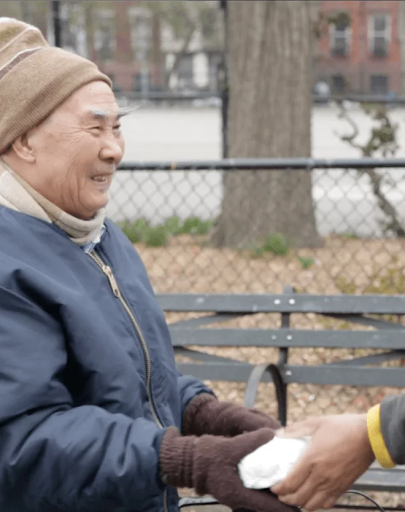
Hearty Start was sponsored by the West Side Community Fund grant for their daily delivery of breakfast and lunch to the homeless population on the west side. Grant funds supported the provision of 24,401 nutritious meals, delivered every Monday through Friday across the six month grant period. Local and corporate volunteers prepared the sandwiches in brown paper bags, and Derrick Walker, Meal Outreach Specialist, traveled on foot, handing sandwiches to unsheltered individuals, including immigrants and asylum seekers, on the sidewalk and in transportation hubs such as Penn Station, Moynihan Station, and Port Authority Bus Terminal. Recipients were also referred to community resources including medical care and hygiene kits.
“I go up and down Seventh Avenue and Eighth Avenue,” said Walker, who was formerly homeless, and resonates with the struggles of the people Hearty Start serves. “This is what we do…making sure everybody gets a meal, everybody eats…It’s a blessing.”